
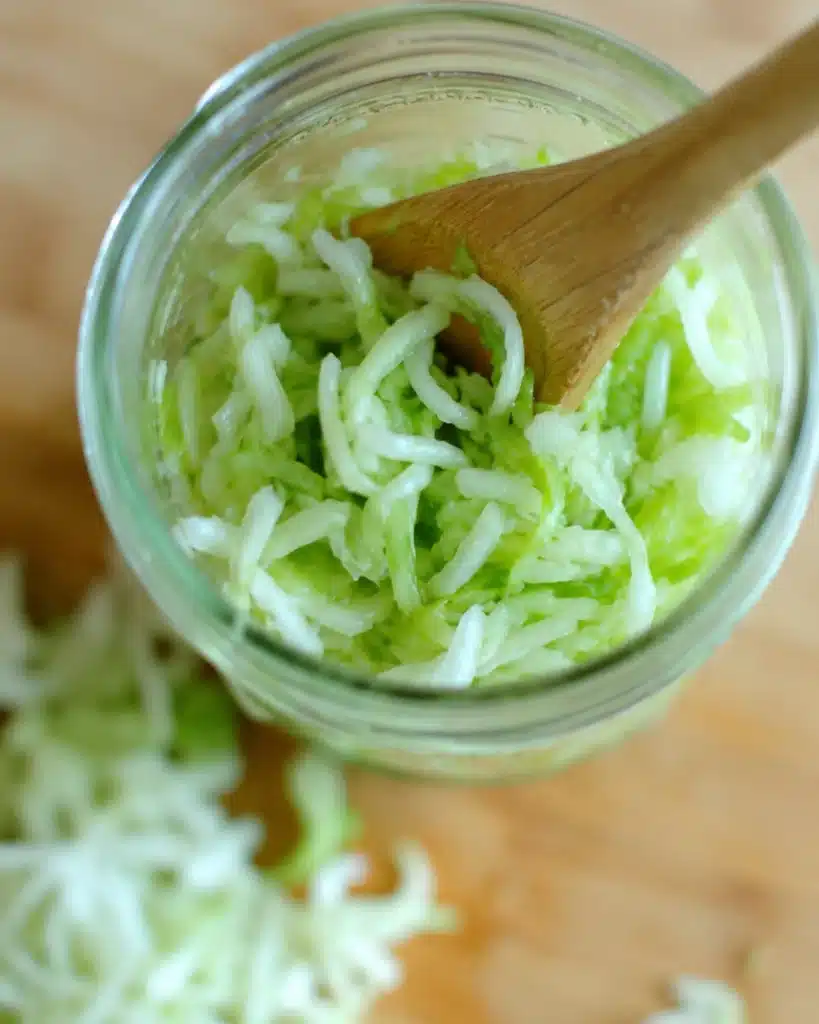
If you’ve been searching for a fermented cabbage recipe that is simple, affordable, and packed with health benefits, you’re in exactly the right place. This homemade sauerkraut uses just two ingredients, yet it delivers incredible flavor and natural probiotics that support digestion and overall wellness.
Because this recipe relies on traditional cabbage fermentation, it creates a naturally tangy, crunchy result that feels both nourishing and satisfying. In addition, it’s beginner friendly, which means you don’t need any special skills to get started. Whether you want to improve gut health or simply explore real food traditions, this recipe is a perfect place to begin.
Jump To
- What Is Fermented Cabbage and Why It Matters
- Tools Needed for This Fermented Cabbage Recipe
- Ingredients for the Fermented Cabbage Recipe
- Step-by-Step Preparation
- Understanding the Fermented Cabbage Salt Ratio
- Why This Fermented Cabbage Recipe Supports Gut Health
- Flavor Variations and Ideas
- How to Eat Fermented Cabbage
- Serving and Storage Tips
- FAQs About Fermented Cabbage Recipe
- Conclusion
What Is Fermented Cabbage and Why It Matters
A Traditional Food With Modern Health Benefits
Fermented cabbage, often known as sauerkraut, is one of the oldest and most trusted fermented vegetables. It’s made by combining shredded cabbage with salt and allowing natural bacteria to transform it through lacto fermentation.
Because this process creates beneficial probiotics, it supports digestion and helps balance gut bacteria. As a result, many people include this fermented cabbage recipe for gut health in their daily routine.
In addition, fermentation enhances flavor. The cabbage becomes slightly sour, crisp, and deeply satisfying. Therefore, it works beautifully as a side dish or topping for many meals.
Tools Needed for This Fermented Cabbage Recipe
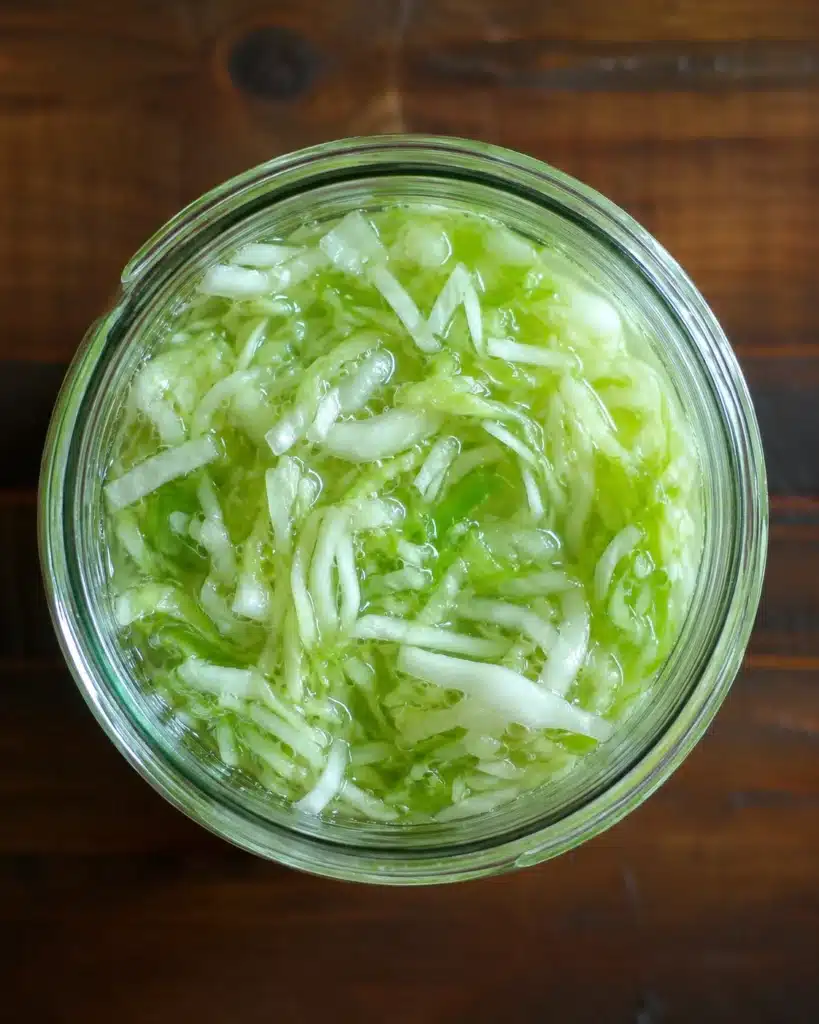
To make this easy fermented cabbage recipe, you only need a few simple tools:
A large mixing bowl
A sharp knife or mandoline
A clean glass jar or mason jar
A weight or small plate to press the cabbage
A clean cloth or lid
Because the process is simple, you don’t need expensive equipment. In fact, this is what makes homemade fermented cabbage so accessible.
Ingredients for the Fermented Cabbage Recipe
This is truly a two ingredient sauerkraut recipe, and that’s part of its beauty:
1 medium green cabbage
1 to 2 tablespoons natural salt
That’s it. No vinegar, no additives, and no shortcuts. Just real food.
Because cabbage releases its own liquid when mixed with salt, it creates a natural cabbage brine. Therefore, there is no need to add water.
Step-by-Step Preparation
How to Make This Fermented Cabbage Recipe Easy
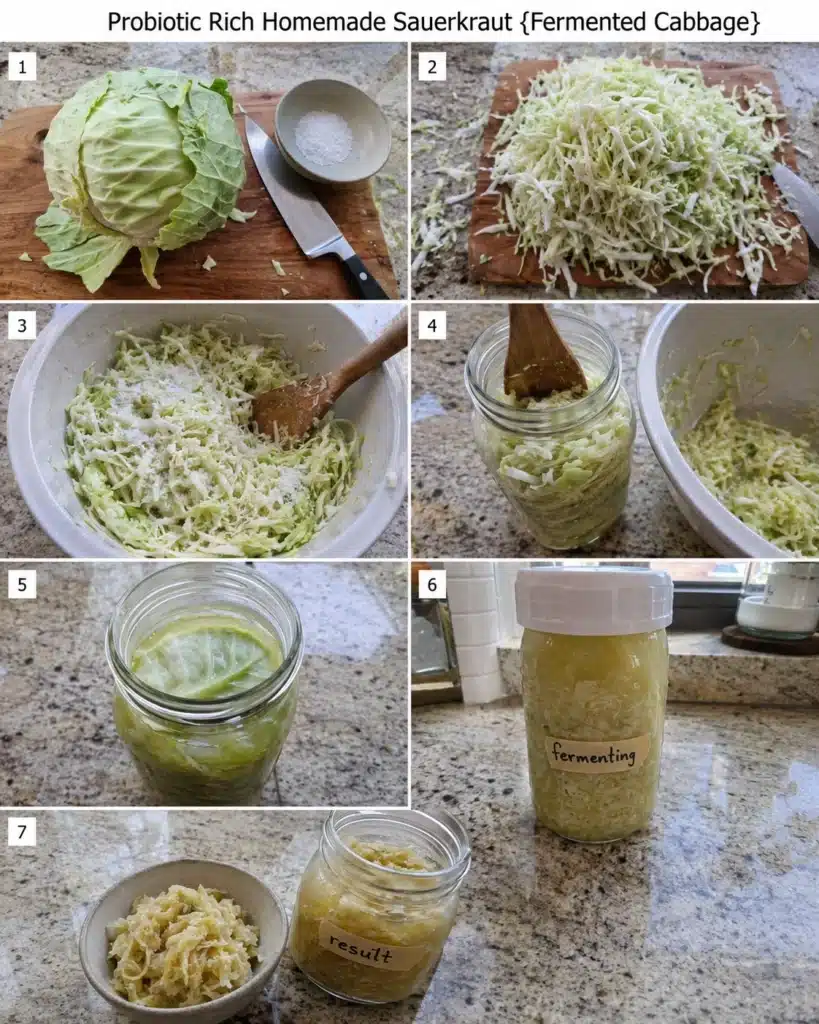
Step 1
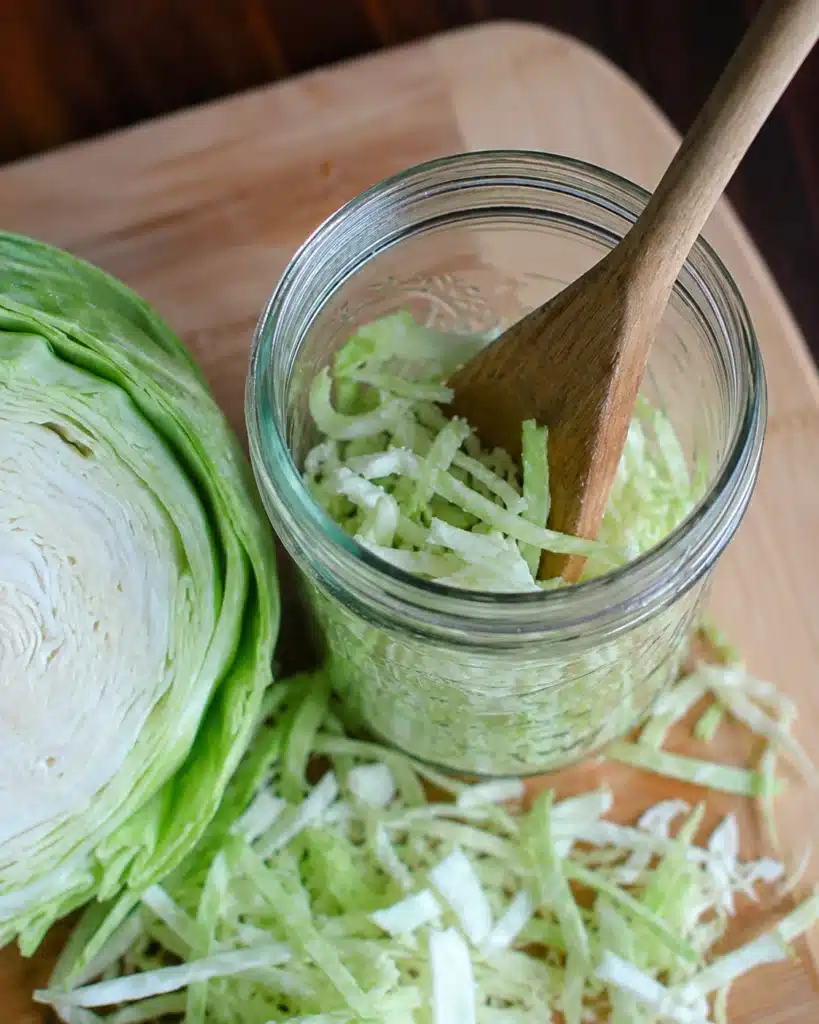
Remove the outer leaves of the cabbage, then finely shred it.
Step 2
Place the shredded cabbage in a large bowl and sprinkle with salt.
Step 3
Massage the cabbage for several minutes. As a result, it will soften and release liquid.
Step 4
Pack the cabbage tightly into a jar. Press it down so the liquid rises above the cabbage.
Step 5
Ensure the cabbage stays fully submerged under the brine.
Step 6
Cover the jar loosely and let it sit at room temperature.
Step 7
Allow it to ferment for 5 to 10 days, depending on your taste preference.
Step 8
Once it reaches the desired flavor, store it in the refrigerator.
Because this process is natural, the flavor will deepen over time. Therefore, taste it regularly to find your perfect balance.
Understanding the Fermented Cabbage Salt Ratio
Why Salt Is Essential in Cabbage Fermentation
The fermented cabbage salt ratio is one of the most important parts of this recipe. Typically, you’ll use about 1 to 2 tablespoons of salt per medium cabbage.
Because salt controls harmful bacteria while encouraging beneficial ones, it ensures safe and successful fermentation. In addition, it helps draw out moisture, creating the natural brine needed for the process.
If you use too little salt, the cabbage may spoil. However, if you use too much, fermentation slows down. Therefore, balance is key.
Why This Fermented Cabbage Recipe Supports Gut Health
A Natural Source of Probiotics
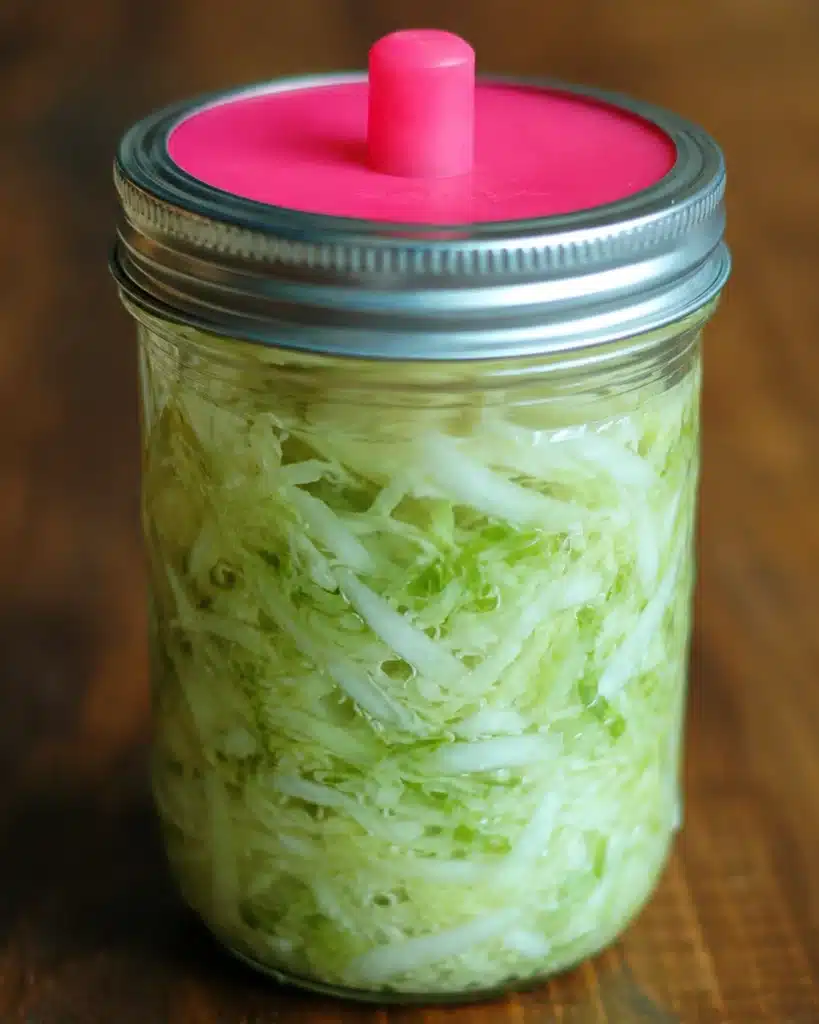
This probiotic sauerkraut recipe is rich in live cultures that support digestion. Because these beneficial bacteria help balance your gut, they can improve digestion and overall wellness.
In addition, fermented foods may help reduce bloating and support nutrient absorption. As a result, many people include this recipe as part of a healthy lifestyle.
If you enjoy gut friendly recipes, you might also like this helpful option:
Try the bariatric gelatin recipe or support your gut health with kefir milk for another gentle and nourishing choice.
Flavor Variations and Ideas
Make Your Fermented Cabbage Recipe Your Own
Although this is a classic homemade sauerkraut, you can easily customize it.
Add shredded carrots for a fermented cabbage carrot recipe
Include garlic or ginger for extra flavor
Try spices like cumin or coriander
Because fermentation enhances natural flavors, even small additions can create exciting variations.
How to Eat Fermented Cabbage
Simple Ways to Enjoy It Daily
If you’re wondering how to eat fermented cabbage, the options are endless.
Serve it as a side dish
Add it to sandwiches or wraps
Mix it into salads
Pair it with warm meals for contrast
Because of its tangy taste, it adds brightness to almost any dish. In addition, it helps balance heavier foods.
Serving and Storage Tips
Keep Your Fermented Cabbage Fresh and Delicious
Once your fermented cabbage in a jar is ready, store it in the refrigerator. This slows down fermentation and preserves flavor.
Always keep the cabbage submerged in its brine. This prevents spoilage and maintains quality.
Because it’s naturally preserved, it can last for several weeks or even months.
FAQs About Fermented Cabbage Recipe
Yes, fermented cabbage is excellent for gut health. Because it contains natural probiotics, it helps balance gut bacteria and supports digestion. As a result, many people include it regularly in their diet to improve overall wellness.
To prepare fermented cabbage for gut health, follow a simple process of shredding cabbage, mixing it with salt, and allowing it to ferment naturally. Because this method creates beneficial probiotics, it supports digestion and improves gut balance. In addition, keeping the cabbage submerged in its natural brine ensures safe fermentation.
A small amount, about 1 to 2 tablespoons a day, is enough to help your gut. Fermented foods are strong, so it’s best to start small and let your body get used to them.
The best way to eat sauerkraut for gut health is raw. Heat can reduce the good bacteria, so it’s better to add it after cooking. You can mix it with your meals to help support healthy digestion.
Conclusion
This fermented cabbage recipe shows how simple ingredients can turn into something special. With just cabbage and salt, you can make a tasty food that supports your gut and adds flavor to your meals.
Because it’s easy to make and very flexible, it’s a recipe you’ll want to keep in your kitchen. You can enjoy it every day or once in a while. Either way, it brings comfort and goodness to your table.
Whether you’re a busy parent, a student grabbing Weight Loss on the go, or anyone looking for something healthy and satisfying, this recipe is a great choice. Don’t forget to leave a comment or tag us with your cooking success! Follow Daily Tasty Recipe on Pinterest and instagram for more inspiration.
Print
Fermented Cabbage Recipe – Probiotic Rich Homemade Sauerkraut
- Total Time: 7 days
- Yield: 1 jar 1x
- Diet: Vegetarian
Description
If you’ve been searching for a fermented cabbage recipe that is simple, affordable, and packed with health benefits, you’re in exactly the right place. This homemade sauerkraut uses just two ingredients, yet it delivers incredible flavor and natural probiotics that support digestion and overall wellness.
Ingredients
- 1 medium green cabbage
- 1 to 2 tablespoons natural salt
- Optional shredded carrots
- Optional garlic cloves
- Optional fresh ginger
- Optional cumin or coriander seeds
Instructions
- Remove the outer leaves of the cabbage and finely shred it.
- Place the shredded cabbage into a large mixing bowl and sprinkle with salt.
- Massage the cabbage for several minutes until it softens and releases liquid.
- Pack the cabbage tightly into a clean glass jar.
- Press the cabbage down firmly until the liquid rises above it.
- Make sure the cabbage stays fully submerged in the brine.
- Cover the jar loosely with a lid or cloth.
- Allow the cabbage to ferment at room temperature for 5 to 10 days.
- Taste regularly until it reaches your preferred flavor.
- Store the fermented cabbage in the refrigerator once ready.
Notes
Always keep the cabbage submerged under its natural brine to prevent spoilage. Taste the sauerkraut daily during fermentation to achieve your preferred tangy flavor. Store refrigerated for several weeks or months.
- Prep Time: 20 minutes
- Cook Time: 0 minutes
- Category: Side Dish
- Method: Fermented
- Cuisine: German
Nutrition
- Serving Size: 2 tablespoons
- Calories: 15
- Sugar: 2g
- Sodium: 180mg
- Fat: 0g
- Saturated Fat: 0g
- Unsaturated Fat: 0g
- Trans Fat: 0g
- Carbohydrates: 3g
- Fiber: 2g
- Protein: 1g
- Cholesterol: 0mg